Welding Safety Rules
Welding Safety Rules
Safe Work, Quality Results
Welding operations involve certain risks due to the use of high heat and electrical energy. To keep these risks under control, welding safety rules must be strictly followed. Safety rules are critical for preventing workplace accidents, protecting employee health, and ensuring continuity of production.
In this article, we address the main safety rules that must be followed during welding operations.
Safety Precautions to Be Taken Before Welding
Before starting any welding operation, the work area and equipment must be checked.
- The welding machine and cables should be checked for proper condition
- No flammable or combustible materials should be present in the work area
- Adequate ventilation must be ensured
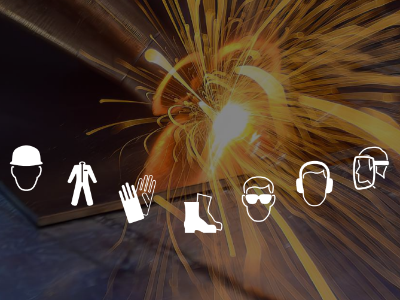
- Appropriate personal protective equipment must be used without exception
These procedures are the first step in preventing potential accidents.
Safety Rules to Be Followed During Welding
Safe working practices are of great importance during welding operations.
- The welding arc must not be viewed with the naked eye
- Welding should not be performed in wet or damp environments
- Electrical connections must not be touched with bare hands
- The direction of spark projection should be controlled
- Proper fume and gas extraction must be ensured in confined spaces
These rules ensure the safety of both the welder and other personnel in the surrounding area.
Safety Rules to be Followed After Welding
Safety rules continue to apply even after the welding operation is completed.
- The welded part must not be touched by hand until it has cooled down
- The work area should be cleaned of slag and metal residues
- Equipment must be switched off and stored safely
- The area should be checked one last time for potential fire hazards.
Electrical and Fire Safety Rules
Electrical and fire risks are among the primary hazards during welding operations.
- Grounding connections must be checked.
- Firefighting equipment should be positioned close to the work area.
- Surfaces where sparks may occur must be protected or properly isolated.
These measures are among the basic requirements for safe production in industrial facilities.
Training and Awareness in Welding Safety
Welding safety is ensured not only through equipment, but also through knowledge and awareness.
- Employees should receive regular occupational safety training.
- Welders should be informed about the welding methods and equipment used.
- A safe-working culture should be adopted throughout the organization.
Conclusion
Compliance with welding safety rules goes beyond accident prevention; it forms the foundation of high-quality, sustainable, and efficient production. Every welding operation carried out in accordance with these rules protects human health while improving production quality.
As Gedik, we continue to contribute to safe production in the industry through our approach that supports safe working principles and our technical expertise.