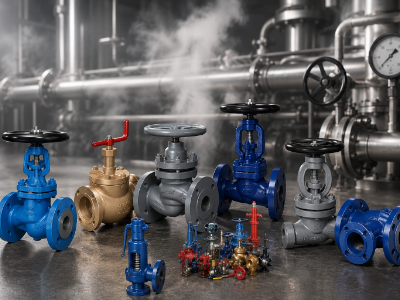
The Importance of Valve Use in Steam Systems
The Importance of Valve Use in Steam Systems
Steam systems play an important role in the production processes of many industrial facilities. Steam is widely used in heating, energy generation, and various process applications. For this reason, the flow within pipelines carrying steam must be managed safely and in a controlled manner.
Valves used in steam systems perform important functions such as controlling steam flow, isolating the system, and preventing backflow. If the correct type of valve is not selected, energy losses, system inefficiency, and safety risks may arise.
Therefore, the types of valves used in steam lines must be carefully determined according to the operating conditions of the system and its intended use.
Main Types of Valves Used in Steam Systems
Various types of valves that perform different functions are used in steam systems. Each valve type is designed to perform a specific function within the system.
Globe Valves
Globe valves are one of the most commonly preferred valve types for flow control in steam systems. This type of valve allows precise adjustment of the flow.
Main features of globe valves:
- Ability to precisely control steam flow
- Resistance to high temperature and pressure
- Reliable sealing performance
Thanks to these features, globe valves are widely used in steam lines that require process control.
Gate Valves
Gate valves are generally used in steam lines to fully open or completely shut off the flow. Since the flow path in this type of valve is straight, pressure loss is very low.
Advantages of using gate valves:
- Low pressure loss
- Suitable for large-diameter pipelines
- Durable and long-lasting structure
For this reason, gate valves are mostly preferred in main steam lines and in applications requiring isolation.
Check Valves
Check valves are a type of valve that allows steam to flow in only one direction within the pipeline. By preventing backflow, they increase system safety.
Main functions of check valves:
- Prevent steam from flowing in the reverse direction
- Protect equipment from back pressure
- Increase system safety
In steam systems, the use of check valves is particularly important at pump and boiler outlets.
Ball Valves
Ball valves are among the valve types preferred in applications that require quick opening and closing. Thanks to the spherical mechanism inside, they control the flow quickly and easily.
Advantages of ball valves:
- Quick opening and closing capability
- High sealing performance
- Compact design
These valves are generally used in auxiliary lines and systems that require rapid intervention.
Selecting the Right Valve for Steam Systems
Choosing the correct valve type for steam systems is very important for system performance. The following factors should be considered when selecting a valve:
- Operating pressure
- Steam temperature
- Pipeline diameter
- Flow control requirements
- System safety
Proper valve selection increases energy efficiency while also reducing maintenance costs.
Conclusion
Valves used in steam systems are among the important components that ensure the safe and efficient operation of the system. Different valve types such as globe valves, gate valves, check valves, and ball valves perform different functions in steam lines.
For this reason, it is highly important that the valves used in industrial steam systems have high durability, reliable sealing, and suitable technical specifications.