Weld Seam Cleaning Methods
Weld Seam Cleaning Methods
The Final Touch of Quality Welding
Post-weld seam cleaning is a critical stage after the welding process, both in terms of aesthetic appearance and weld quality. Removing slag, burrs, oxides, and discoloration increase the mechanical strength of the weld while eliminating surface defects. Especially in industrial applications, selecting the correct cleaning method directly affects the service life and performance of the product.
In this article, we discuss weld seam cleaning methods, their areas of application, and the points to be considered.
Why Should Weld Seams Be Cleaned?
- Removal of slag and burrs formed after welding
- Reduction of corrosion risk
- Surface preparation for painting, coating, or secondary welding operations
- Achieving a smoother and more professional appearance
- Clearer identification of welding defects (such as cracks, porosity, etc.)
Most Common Weld Seam Cleaning Methods
1. Mechanical Cleaning
Mechanical cleaning is one of the most used and practical methods.
Equipment used:
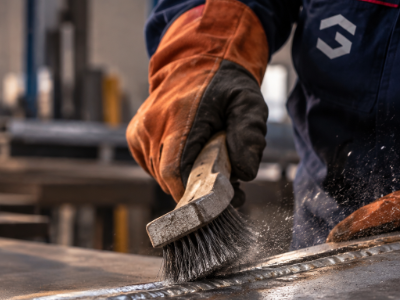
- Wire brushes
- Angle grinders
- Sanding discs
Advantages:
- Fast and easy to apply
- Suitable for on-site operations
- Cost-effective
Points to consider:
Excessive pressure on the surface may damage the base material.
2. Chemical Cleaning (Pickling)
Chemical cleaning is especially preferred for stainless steel welds.
What does it provide?
- Removes oxide layers and discoloration
- Passivates the surface
Areas of application:
- Food, pharmaceutical, and chemical industries
- Applications requiring hygienic and smooth surfaces
Important note:
Personal protective equipment must always be used when working with chemical substances.
3. Electrolytic Weld Cleaning
Electrolytic weld cleaning is a modern and precise method.
Key features include:
- Does not generate heat
- Does not damage the base material
- Particularly effective for TIG weld seams
Advantages:
- Bright and clean surface
- Minimal material loss
- Fast application
4. Sandblasting and Shot Blasting
Sandblasting and shot blasting are mainly used in heavy industry and mass production lines.
What do they provide?
- Homogeneous cleaning over large surfaces
- Ideal surface preparation before painting
Areas of application:
- Steel constructions
- Pipelines
- Shipbuilding and shipyard applications
How to Choose the Right Cleaning Method
When selecting a weld seam cleaning method, the following criteria should be taken into consideration:
- Type of material being welded
- Welding method used (MIG/MAG, TIG, electrode, etc.)
- Required level of surface aesthetics and hygiene
- Production speed and cost expectations
Conclusion
Weld seam cleaning is not merely a visual process; it is an essential step for ensuring quality, strength, and long service life. By using the correct method and appropriate equipment, it is possible to achieve maximum performance in welded joints.
As Gedik, we continue to create added value at every stage of welding processes through the right materials, the right methods, and our technical expertise.