What Is a Pressure Regulator in Welding? Key Points to Know When Choosing One
What Is a Pressure Regulator in Welding? Key Points to Know When Choosing One
Pressure regulators are critical equipment used in welding operations to ensure a safe, stable, and controlled gas flow. In MIG/MAG, TIG, and oxy-fuel welding applications, they reduce the high pressure from the gas cylinder to a suitable working pressure. Therefore, the regulator is an essential component for both welding quality and operator safety.
A pressure regulator reduces the pressure in the gas cylinder, maintains a stable output pressure, and prevents fluctuations in gas flow during operation. If not properly selected, it can lead to poor weld quality, increased gas consumption, or potential safety hazards.
What Is a Pressure Regulator?
A pressure regulator reduces the high pressure in gas cylinders to a controllable working pressure. In welding applications, it determines:
- The pressure at which the gas exits,
- The flow rate of the gas,
- Whether the gas flow remains stable.
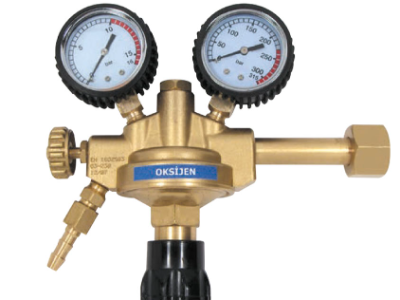
Generally, it has a two-gauge structure:
- Cylinder Pressure Gauge: Indicates the high pressure inside the cylinder (usually 150–200 bar).
- Output Pressure Gauge: Shows the working pressure required for welding (e.g., 10–15 L/min for MIG/MAG).
Regulators are designed differently depending on the type of gas used.
Which Gases Are They Used With?
Pressure regulators work with different gases depending on the welding method used:
- MIG/MAG (Gas Shielded) → Argon, CO₂, Argon–CO₂ mixtures
- TIG Welding → Argon, Helium
- Oxy-Gas Cutting and Welding → Oxygen and acetylene
- Brazing → Propane, LPG, special mixtures
Different connection standards and internal designs are used for each gas. Therefore, using an incompatible regulator is both dangerous and inefficient.
Functions of a Pressure Regulator
The pressure regulator performs tasks that ensure both the quality and safety of the welding process:
- Reduces cylinder pressure to the working pressure
- Maintains a stable output pressure (prevents pressure fluctuations)
- Controls gas flow
- Ensures operator safety
- Optimizes gas consumption
Especially in MIG/MAG and TIG welding, achieving a high-quality weld is impossible without a stable and accurate gas flow.
Types of Pressure Regulators
The most commonly used regulators in the welding industry are:
1. Single-Stage Regulators
- Reduce cylinder pressure in a single step.
- More affordable.
- Suitable for short-term jobs and low production volume.
- Less sensitive to pressure fluctuations compared to dual-stage models.
2. Dual-Stage Regulators
- Reduce pressure in two steps:
- High pressure → intermediate pressure
- Intermediate pressure → working pressure
- Very low pressure fluctuation, providing a more stable gas flow.
- Preferred in high-production facilities.
3. Regulators by Gas Type
- CO₂ Regulators
- Argon / Gas Mixture Regulators
- Oxygen Regulators
- Acetylene Regulators
- Propane / LPG Regulators
Each gas has a specific pressure and connection type, so regulators are not interchangeable.
Key Points to Know When Choosing a Pressure Regulator
Selecting the right regulator directly affects welding performance. Here are the main criteria to consider when making a decision:
1. Gas Type
Each gas has its own pressure standard and connection type.
Incorrect regulator → risk of gas leakage + faulty flow + poor seam quality
2. Welding Method and Purpose of use
Different regulators are required for MIG/MAG welding and TIG welding.
For oxy-fuel cutting, oxygen and acetylene regulators are each specifically designed for their respective gases.
3. Flow Rate and Flow Precision
Precise flow control is critical in professional welding work.
For example, in MIG/MAG welding, a gas flow of 20 L/min instead of 12 L/min can cause:
- Unnecessary consumption,
- Turbulence,
- Weld burn defects
Correct regulator → fixed L/min value + low deviation + controlled source bath
4. Production Volume
The ideal choice for businesses with continuous flow requirements:
• Two-stage,
• High flow capacity,
• Durable body regulators.
5. Safety Standards
The regulator you choose should have the following features:
- Safety valve against overpressure
- Burst disc
- Secure connection design
- Certifications such as CE, ISO, etc.
- High-quality brass body
Safety is especially critical for oxygen and acetylene regulators.
6. Durability and Service Support
In professional use, the regulator is exposed to high pressure for long periods. Therefore:
• Availability of spare parts
• Ease of authorised servicing
• Long-lasting diaphragm and valve mechanism are decisive factors in the choice.
Safety Tips for Using a Pressure Regulator
A short but important checklist:
• Before attaching the regulator, briefly open the cylinder valve to clear any dust.
• Never tighten the connection with a pipe wrench; use the designated tool.
• Check for gas leaks with soapy water—never use a flame.
• Always keep the cylinder in an upright position.
• After use, close the cylinder valve and release the pressure from the regulator.
• Do not use the regulator if the gauges are faulty.
Conclusion
The pressure regulator at the source is one of the most critical pieces of equipment in terms of quality, safety and gas consumption. An incorrectly selected regulator can cause:
• welding defects,
• high gas consumption,
• workplace accidents,
• machine malfunctions.
A regulator with the correct gas type, proper flow rate adjustment, safe construction, and high-quality production standards is the foundation of an efficient and safe welding process.