What is a Welding Arc? How It Forms and Its Effects on Welding Quality What is a Welding Arc?
What is a Welding Arc? How It Forms and Its Effects on Welding Quality
What is a Welding Arc?
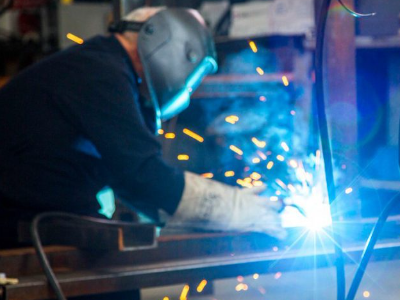
A welding arc is a high-temperature, controlled electrical plasma discharge that occurs between the electrode of the welding machine and the base metal. This arc melts the metal surfaces and creates a weld pool, allowing the parts to be permanently joined.
Arc welding methods form the foundation of the most widely used welding techniques in the industry.
How Does a Welding Arc Form?
The formation of a welding arc occurs in three main stages:
- The electrode comes into contact with the workpiece.
- When the contact is broken, the electric current becomes ionized.
- An arc is generated between the electrode and the metal.
The temperature of this arc can reach approximately 6,000–8,000°C. The resulting high heat allows the base metal and filler metal to melt in a controlled manner.
Functions of the Welding Arc
The welding arc is not just a source of heat. It also:
- Melts the base metal
- Transfers the filler metal into the weld pool
- Determines the shape of the weld bead
- Affects weld penetration and strength
Therefore, having a stable and controlled arc is critically important for welding quality.
Types of Welding Arcs
The characteristics of the arc vary depending on the welding method:
Short Arc
- Suitable for thin materials
- Less spatter
- Controlled heat input
Spray Arc
- Operates at high current
- Provides deep penetration
- Preferred for thick sections
Pulsed Arc
- Balances heat input
- Low spatter
- High weld quality
In particular, in modern MIG/MAG and TIG welding machines, arc control is digitally optimized.
Factors Affecting Welding Arc Stability
For a welding arc to remain stable, the following factors are important:
- Correct current and voltage settings
- Proper selection of electrode or wire
- Type and flow rate of shielding gas
- Torch angle and welding distance
- Arc control technology of the welding machine
Incorrect settings can cause spatter, porosity, insufficient penetration, and weak weld formation.
The Relationship Between Welding Arc and Welding Quality
A stable welding arc results in:
- Smoother and more aesthetically pleasing welds
- Higher mechanical strength
- Less need for rework
- Lower consumption of consumables
This provides advantages in production in terms of time, cost, and quality.
Gedik Welding with Controlled and Powerful Arc Performance
Gedik Welding offers maximum performance in industrial welding applications through welding machines equipped with advanced arc control technologies, as well as high-quality welding wires and electrodes. Our products adapt to different arc characteristics, helping to achieve stable, reliable, and repeatable welding results.
Conclusion
The welding arc is the heart of the welding process. Proper formation and control of the arc directly affect the strength, appearance, and performance of the weld. A welding arc created with the right equipment and correct parameters is the key to long-lasting and reliable joints.