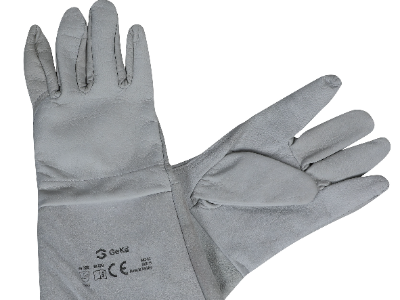
What is a Welding Glove?
What is a Welding Glove?
A welding glove is personal protective equipment used to protect the operator’s hands during welding operations against high heat, sparks, splashes of molten metal, mechanical impacts, and electrical risks.
Since the risks that occur during welding directly affect the hands and wrist parts, the correct usege of welding gloves has critical importance for both occupational safety and work efficiency.
Functions of Welding Gloves
A welding glove does not only provide protection; it also affects welding performance:
- Provides protection against high temperatures
- Provides protection against high temperatures
- Offers resistance to mechanical impacts
- Improves hand control and grip strength during welding
- Ensures comfort during long working periods
Using unsuitable gloves can lead to serious occupational accidents and loss of workforce.
Things You Need to Know When Choosing Welding Gloves
1. Suitability for the Type of Welding Performed
The welding method is a determining factor in glove selection:
- MIG/MAG Welding: Heat-resistant gloves with medium flexibility
- TIG Welding: Thinner gloves offering high finger sensitivity
- Electrode (MMA) Welding: Thick gloves with high heat and spatter protection
Since each welding method involves different risks, a single type of glove is not suitable for every application.
2. Heat and Flame Resistancy
Welding gloves must be produced from materials that are resistant to high tempatures.
Commonly preferred materials include:
- Heat-resistant leather (cowhide, goatskin, or sheepskin)
- Flame-resistant stitching threads
- Long-cuff designs
Insufficient heat protection can lead to a serious risk of burns.
3. Balance Between Glove Thickness and Flexibility
The thicker the glove, the higher the level of protection; however, flexibility decreases.
Therefore:
- Thinner and more flexible gloves should be preferred for precision work
- Thicker gloves should be used for heavy-duty and intensive welding application
Achieving the right balance improves both safety and welding quality.
4. Wrist and Forearm Protection
During welding, splashes can harm not only the hands but also the wrists and forearms.
Therefore:
- Gloves with long cuffs
- Designs that fully cover the wrist
provide extra protection and enhance occupational safety.
5. Standards and Certifications
Welding gloves must comply with relevant occupational safety standards.
Particularly;
- EN 388 (mechanical risks)
- EN 407 (heat and fire risks)
products that meet the above-mentioned standards should be preferred.
6. Comfort and Long-Term Use
Welding operations often involve long working periods. Therefore:
- Inner linings that reduce sweating
- Ergonomic cuts
- Non-slip surfaces
increase operator comfort and work efficiency.
Safe and Professional Welding Practices with Gedik Welding
Gedik Welding supports a professional approach not only in consumables and machines but also in occupational safety and the proper use of equipment. Choosing the right protective equipment is as important as achieving high-quality welding.
Conclusion
Welding gloves are one of the fundamental elements of welding safety. Choosing the right gloves protects the operator and ensures that welding operations are carried out in a more controlled, safe, and efficient manner. Using appropriate gloves according to the type of welding and working conditions plays a critical role in preventing occupational accidents.