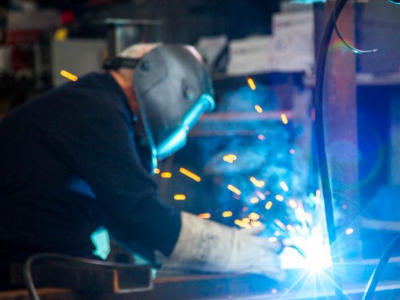
What is Welding? Types, Applications and Basic Information
What is Welding? Types, Applications and Basic Information
Welding is the process of permanently joining metal or thermoplastic materials using heat, pressure, or a combination of both. As one of the most fundamental processes in industrial production, welding ensures that products are strong, safe, and durable across a wide range of sectors, from automotive and shipbuilding to pipelines and steel construction.
The welding process is based on the principle of melting the surfaces of two materials with controlled heat input and allowing them to cool, forming a molecular-level bond. Filler metal may or may not be used during this process. Depending on the method, welding can be performed manually, semi-automatically, automatically, or using robotic systems.
What Is the Main Purpose of Welding?
The primary objective of the source is to join two materials in a manner that is:
• Strong
• Watertight
• Durable
• Long-lasting
A welded joint can often be as durable as the base material, and with the right material and parameters, it can even be stronger.
How Is Welding Performed?
Although each welding method has its own working principle, the basic process generally involves the following steps:
1. Surface preparation is carried out ( cleaning of grease, dirt, and rust).
2. The two materials are positioned at the appropriate distance and angle.
3. The welding machine is adjusted to the appropriate current, voltage, and parameters.
4. Heat and/or pressure is applied to melt or plasticise the materials.
5. If necessary, filler wire is added to the base material.
6. After cooling, a permanent bond in the form of a weld bead is formed.
The quality of this process depends on many factors, including the machine used, the welding method, the consumables, the operator's skill, and the working environment.
What are the Types of Sources?
Although there are hundreds of source methods in the world, the methods commonly used in industry are grouped into four main categories:
1. Fusion Welding
The material is heated to its melting point and joined.
Common methods in this group include:
• MIG/MAG Gas Shielded Arc Welding
• TIG Welding
• MMA (Shielded Metal Arc) Welding
• Submerged Arc Welding (SAW)
• Plasma Welding
• Oxy-Acetylene Welding
This is the most widely used method and is central to the metal manufacturing industry.
2. Pressure Welding
The material is not melted; joining is achieved through plastic deformation by applying heat and pressure together.
Examples:
• Friction welding
• Explosive welding
• Resistance welding (spot welding, seam welding)
• Ultrasonic welding
It is frequently used in the automotive, electrical-electronic and aerospace industries.
3. Thermochemical Welding
High temperatures are achieved through chemical reactions.
For example:
• Aluminothermic welding (rail welding)
This is a widely used method for joining rails on railway tracks.
4. Brazing and Soldering
Although not technically included in the welding group, it is among the metal joining methods.
• Hard brazing: above 450°C
• Soft soldering: below 450°C
It is used in electronics, piping, and fine metal work.
Where is Welding Used?
The welding method is the cornerstone of modern manufacturing. The main sectors where it is used are:
Where is Welding Used?
The welding method is the cornerstone of modern manufacturing. The main sectors where it is used are:
• Automotive and related industries
• Shipbuilding and shipyards
• Steel construction and heavy industry
• Pressure vessels and boiler production
• Pipelines and energy facilities
• Defence and aerospace
• Machinery manufacturing
• Metal furniture and decorative work
• Maintenance, repair, and field applications
In short, welding is present wherever metal is used.
Advantages of Welding
Welding has many advantages over other joining methods:
• High strength
• Lightweight (no additional materials such as screws or rivets required)
• Leak-proof
• Flexibility (can be applied to different materials and shapes)
• Cost-effective production
• Suitability for automation
For these reasons, it is always the preferred method in mass production, large-scale structures, and precision manufacturing.
Factors Affecting Welding Quality
The following points are important for obtaining a high-quality weld:
• The correct welding method
• Suitable welding machine and equipment
• High-quality consumables
• Correct parameter settings
• Operator training and experience
• Adequate shielding gas flow
• Clean and prepared surfaces
• Working environment conditions
Errors in any of these factors can lead to defects such as porosity, burn-through, lack of penetration, and cracks.
Why is Safety Important in Welding?
Safety precautions are vital because welding involves high heat, UV rays, fumes and molten metal splashes.
The following must be used:
• Welding mask
• Gloves, protective apron
• Ventilation and fume extraction systems
• Eye and face protection equipment
• Electrical safety checks
• Fire extinguishing equipment
A safe working environment both improves product quality and prevents accidents.
Conclusion
Welding is one of the most critical joining processes that form the basis of modern manufacturing. Used in every field, from steel construction to automotive, energy infrastructure to precision manufacturing, this method ensures high strength, long life and safe production when combined with the right equipment, appropriate parameters and trained operators.